
Spent caustic recovery
Spent caustic is a waste product created in many industrial processes where caustic soda (NaOH) or potash (KOH) is used. This includes industries like mining, metals, alumina refining, graphite purification, battery recycling, chemical manufacturing, refineries, and textile production. After use, the caustic solution becomes diluted and contaminated, turning into highly alkaline wastewater with a mix of organic and inorganic pollutants, suspended solids, oils, and other impurities.
Recovering this spent caustic brings several benefits:
- Lower purchase, disposal, and treatment costs
- Support for sustainability goals and regulatory standards
- Less waste and improved process efficiency
Alfa Laval offers complete, compact, and energy-efficient evaporation systems to achieve caustic recovery. The corrosion-resistant design and materials lead to a long service life and plant reliability. This is supported by our extensive experience supplying caustic evaporation plants in the chlor-alkali industry.
Spent caustic treatment
Spent caustic consists of NaOH or KOH, water, and contaminants from the process in which it is used. As the caustic solution is consumed, it becomes diluted and harder to treat. By re-concentrating spent caustic with Alfa Laval technologies, you can reduce chemical consumption and lower operational costs.
Why treating the caustic on site offers benefits compared to disposal and external recycling
Recovery and re-concentration are important alternatives to traditional neutralization and disposal, which are often expensive and technically challenging. Neutralization typically requires significant acid consumption and careful pH control, resulting in higher operating costs and large volumes of salts and sludge that must be managed. With stricter environmental restrictions, disposal costs continue to rise due to higher transport expenses and the need for specialized handling of hazardous waste. In addition to direct costs for chemicals and treatment, companies also face indirect costs from downtime, maintenance, corrosion, and compliance risks.
By recovering and re-concentrating spent caustic, instead of relying solely on neutralization and disposal, plants can reduce waste volumes, lower treatment costs, and improve sustainability. Caustic recovery is a smart solution for both environmental and financial reasons
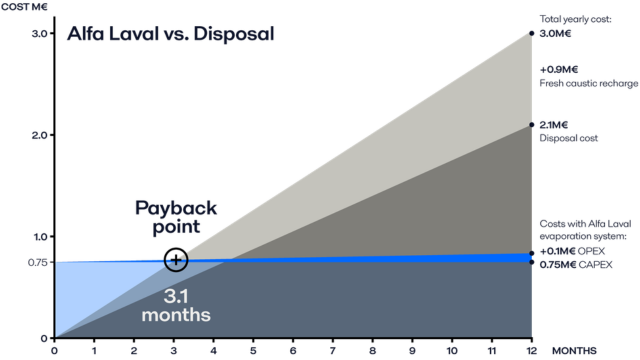
Operational case: Recovering spent caustic to cut costs and support a zero-waste ambition
Some years ago, we had the chance to work on a project with an industrial plant. The main driver behind the project was clear: support the company’s corporate target of becoming a zero-waste facility.
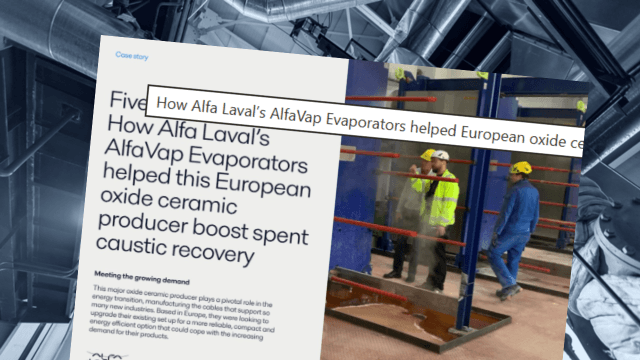
Case story: Five years of uptime: How Alfa Laval’s AlfaVap Evaporators helped this European oxide ceramic producer boost spent caustic recovery
This major oxide ceramic producer plays a pivotal role in the energy transition, manufacturing the cables that support so many new industries. Based in Europe, they were looking to upgrade their existing set up for a more reliable, compact and energy efficient option that could cope with the increasing demand for their products.
Our solution
Alfa Laval systems are designed based on extensive experience in caustic evaporation and with the various contaminants that can be present in the diluted solutions. Our AlfaVap, AlfaCond and AlfaFlash products offer many benefits including:
- Flexible, available in MVR, TVR and Multiple effect configuration
- Easily upgradable to meet your changing needs thanks to modular design
- Significantly lower installation height than competing technologies
- Less power and steam consumption than traditional shell-and-tube solutions
- Available in standard modular sizes
Caustic recovery can be a very beneficial process. Let Alfa Laval show you how!